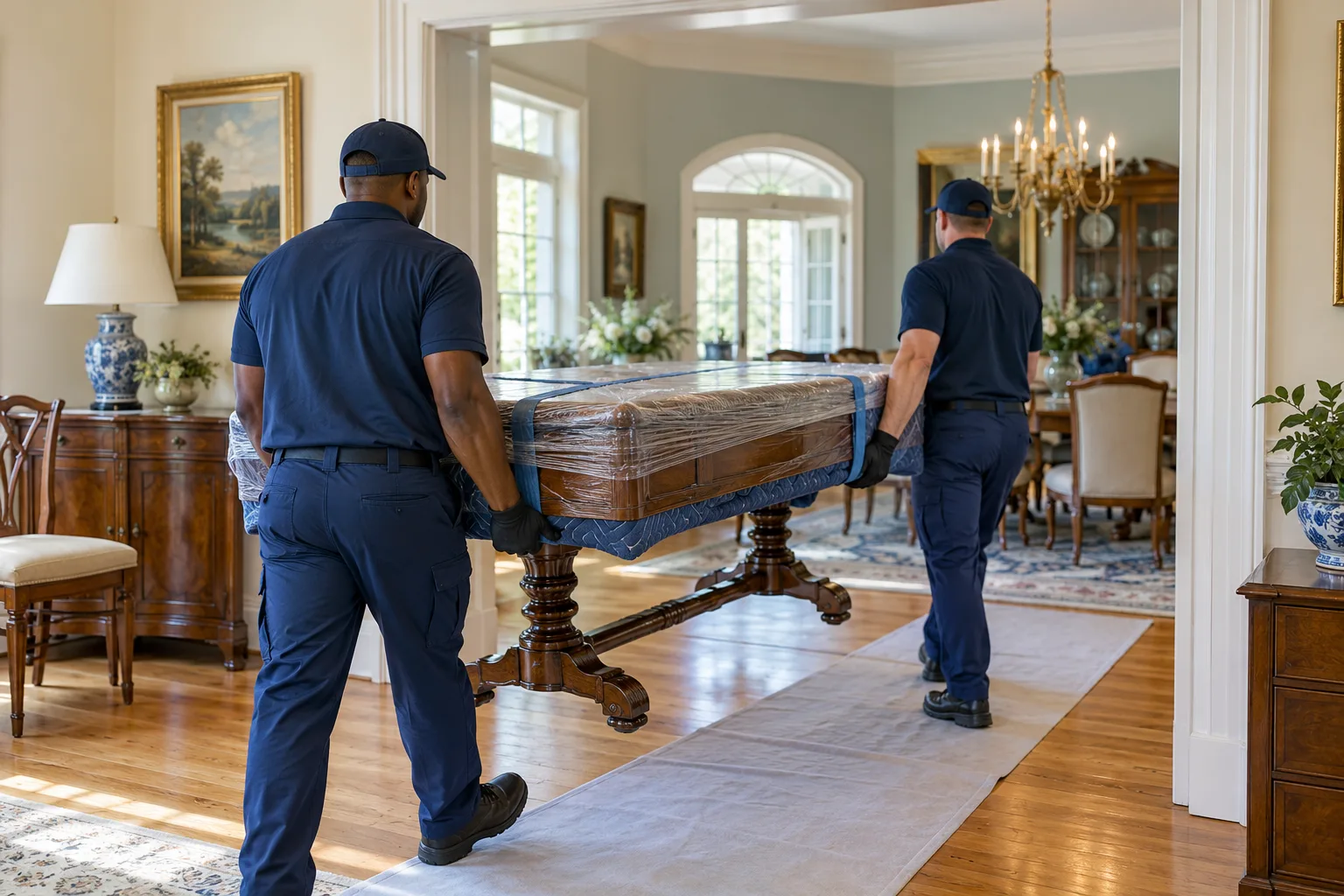
Measure the entire route, not only the furniture. A dresser can clear the bedroom door and still fail at a stair landing, exterior turn, elevator opening, or truck approach.
Record the piece
Measure width, height, and depth at the widest fixed points. Note removable feet, leaves, shelves, mirrors, drawers, cushions, and doors. Record glass, stone, sleeper mechanisms, or other features that add weight or require separate handling.
Measure every pinch point
| Location | What to record |
|---|---|
| Doorways | Clear opening with the door at its widest usable position |
| Hall turns | Width before and after the turn, plus ceiling height |
| Stairs | Width, landings, railings, overhead clearance, and turns |
| Elevator | Door opening, cab dimensions, reservation rules, and loading access |
| Exterior route | Steps, gates, slopes, surface, and carry distance |
Do not disassemble by guess
Some pieces are designed to come apart; others can be damaged by removing structural fasteners. Photograph the underside and joints, locate manufacturer instructions when available, and leave uncertain disassembly to the removal team’s assessment.
Send useful photos
- Full view of each piece
- Doorway from both sides
- Stairs and landings
- Elevator interior and door
- Exterior path to the loading position
- Any fragile floor, wall, or railing near the route
Dimensions and route photos make the first conversation more accurate. They do not replace an on-site assessment for unusually heavy, fragile, or built-in pieces.