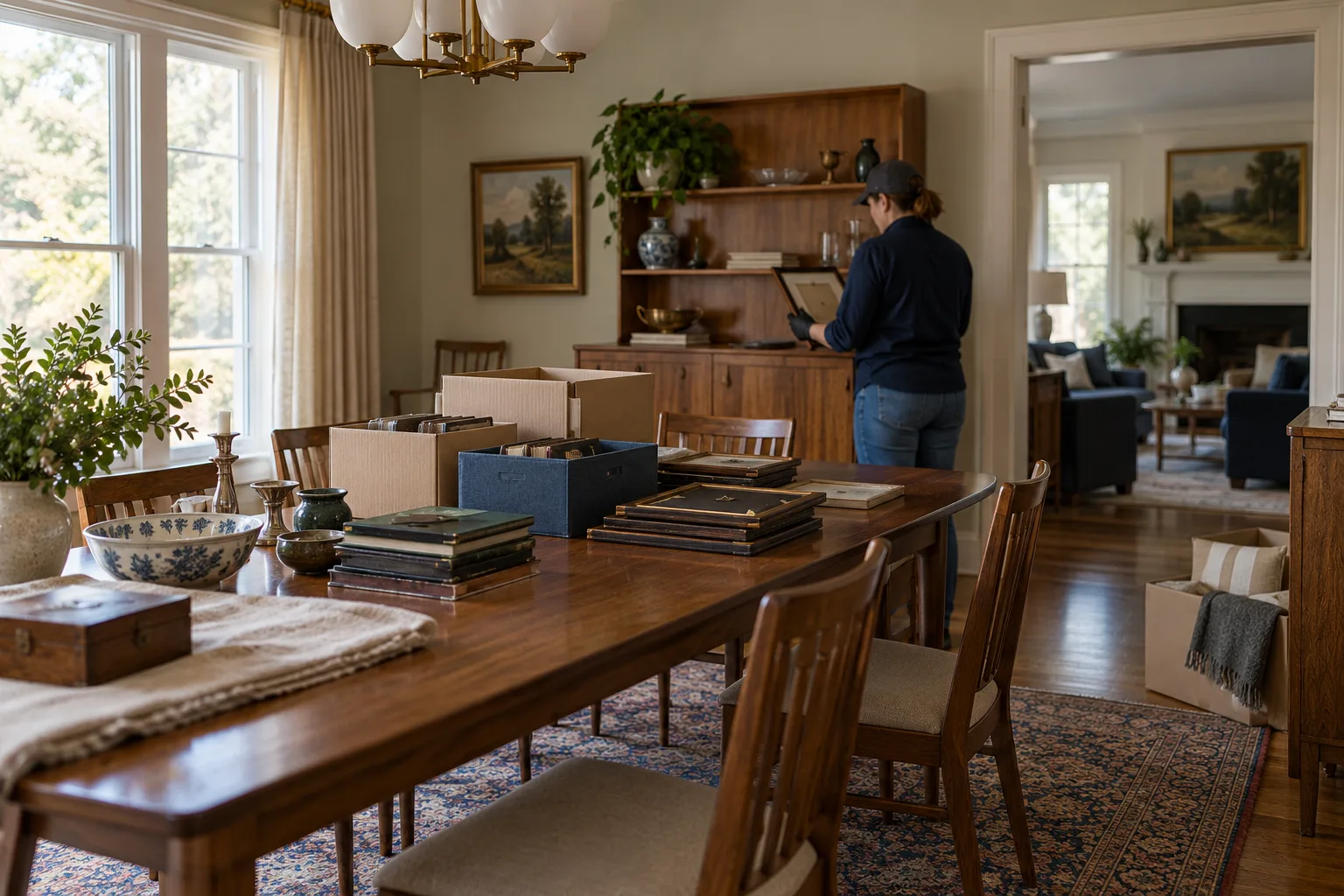
Do not begin by filling bags. The first week is for protecting access, identifying who can make decisions, and creating a place for anything uncertain. A fast start without those controls can create arguments and make important records harder to find.
Secure the property and the decision process
Confirm who has keys, who is authorized to approve removal, and whether the home is insured and maintained. Photograph each room before items move. Record existing damage and note locked cabinets, safes, attics, sheds, and vehicles for separate review.
Build four working groups
| Group | What belongs there | Rule |
|---|---|---|
| Keep | Items already assigned to a person | Label with the recipient and move only with approval. |
| Review | Documents, photos, collections, and uncertain belongings | No removal until the authorized person decides. |
| Release | Ordinary items approved for removal | Keep separate from donation or sale candidates. |
| Property | Keys, remotes, manuals, fixtures, and items staying with the home | Store together for the future owner or agent. |
Walk the route, not only the rooms
Measure large furniture and compare it with doorways, stairs, elevators, gates, and the final loading position. Note fragile floors, tight corners, parking restrictions, and any building hours. These details affect labor and timing more than a room count alone.
Questions to settle before removal day
- Who gives final approval when an uncertain item appears?
- Are legal papers and financial records already secured?
- Which rooms or cabinets are off limits?
- Will family members collect assigned items before the cleanout?
- What must remain with the property?
- Who can meet the crew or provide authorized access?
If the property is still in probate or ownership is unsettled, ask the estate’s attorney or representative what can be moved. A cleanout company should follow the approved scope, not decide legal authority.