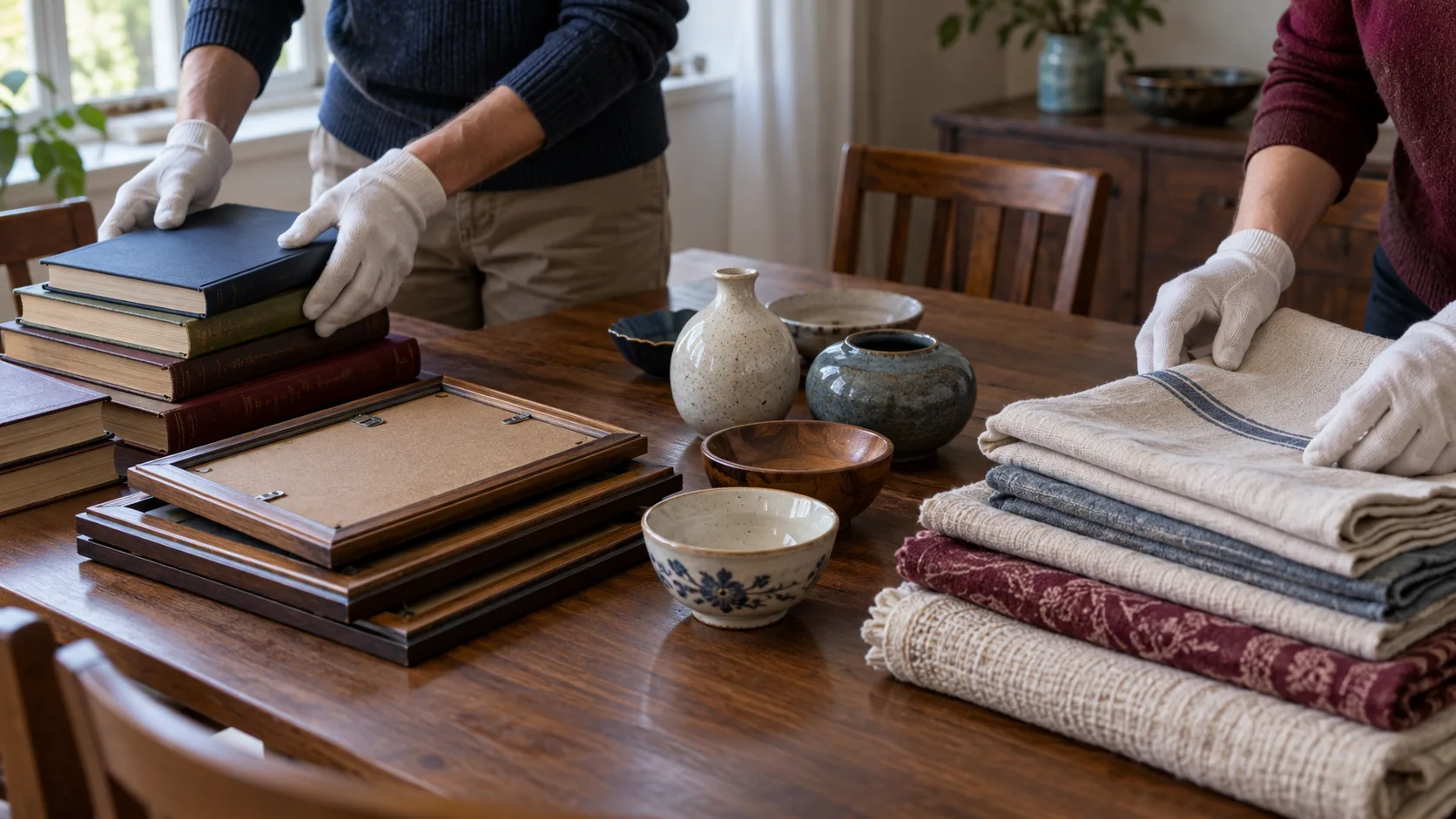
Create the review area before the first drawer opens. Use one room or table that is outside the loading route, and make it clear that nothing there leaves the property. This gives everyone a safe place to pause a decision.
Start with categories that need care
Set aside identification, financial and tax records, property papers, military records, insurance documents, photographs, correspondence, jewelry, keys, and digital devices. Do not treat locked boxes or unknown envelopes as ordinary debris.
Use a two-person check for uncertain items
When more than one heir or representative is involved, have two authorized people review the uncertain group. Record the decision in plain language. If the decision cannot be made that day, the item stays.
A room review card
| Before leaving a room | Check |
|---|---|
| Fixed storage | Closet shelves, high cabinets, built-ins, and drawer backs |
| Paper locations | Desks, nightstands, file boxes, books, and kitchen drawers |
| Hidden containers | Luggage, purses, coat pockets, tins, and small boxes |
| Property items | Keys, remotes, manuals, alarm information, and appliance records |
Protect privacy
Do not leave personal records in open discard piles. Ask the authorized representative how private paper and data-bearing devices should be handled. The correct method depends on the record and the estate’s requirements.
A clear review zone slows the job slightly at the start and prevents much larger problems later. Once the room has been checked, mark it in a way the whole decision team understands.